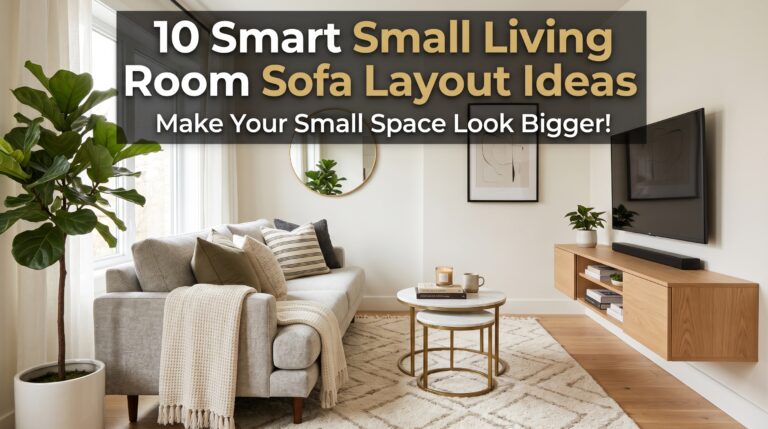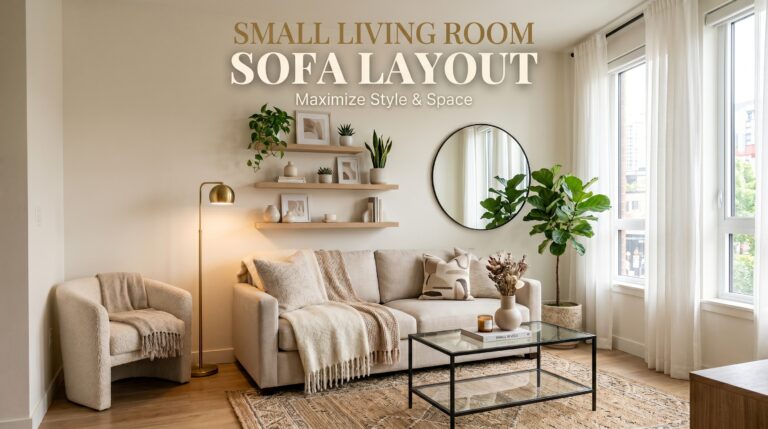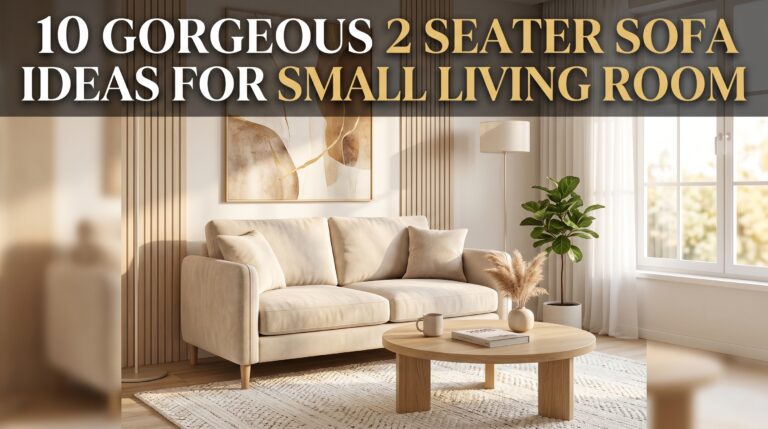
Small Living Room Sofa Layout Ideas That Actually Work
Let’s be honest… a small living room can feel like a puzzle you didn’t sign up to solve.
You buy a sofa thinking it’ll fit just fine, and suddenly your room feels cramped, awkward, and… kind of frustrating. You bump into corners, there’s no flow, and relaxing doesn’t feel so relaxing anymore. Not ideal, right?
Here’s the thing. It’s not your room’s fault. It’s all about the sofa layout.
I’ve tried this before in a tiny apartment. I pushed the sofa against the wall thinking it would “save space”… and somehow the room felt even smaller. Weird, right?
From my experience, the way you place your sofa can completely change how your living room feels. Even a small shift can make it look bigger, cleaner, and more inviting.
So you might be wondering:
- How do I arrange a sofa in a small living room without crowding it?
- What’s the best sofa layout for a tight space?
- How can I make my living room feel bigger without removing furniture?
You’re in the right place.
Let’s go idea by idea.
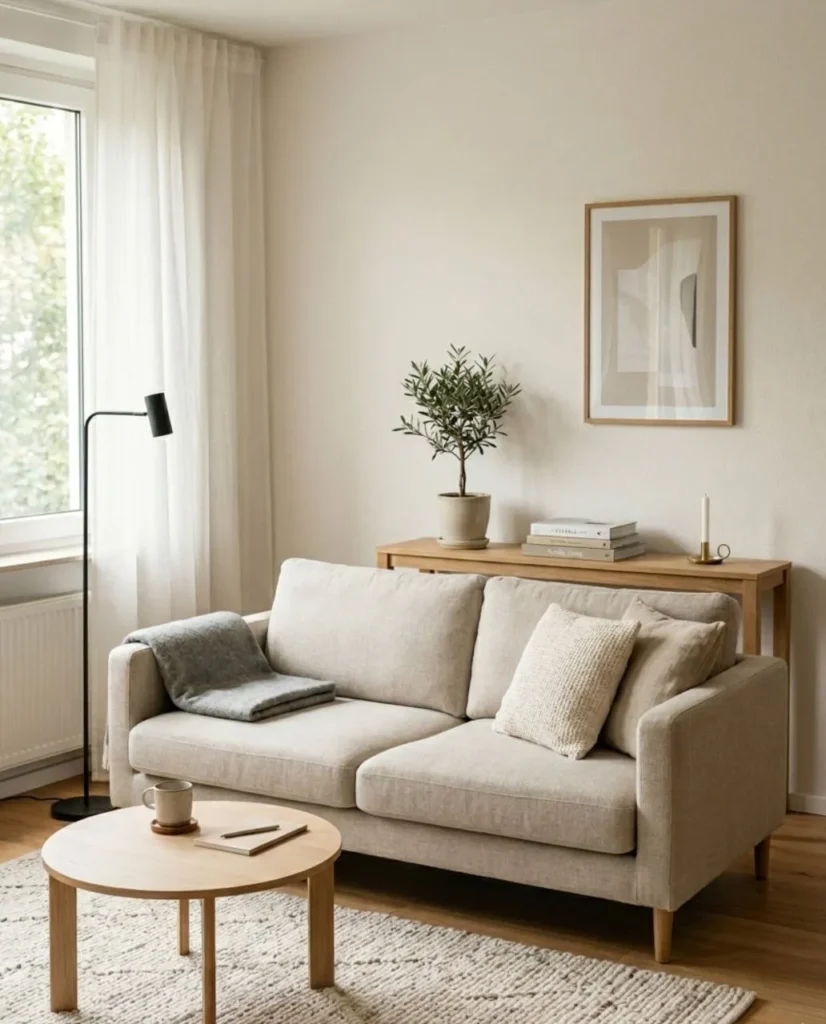
1. Float the Sofa Away from the Wall
Most people push the sofa against the wall. It feels logical, but it doesn’t always work.
Pulling your sofa slightly away from the wall can actually create depth. It gives your room a more open and airy feel. Even a few inches can make a difference.
Why this works
- Creates visual breathing space
- Makes the layout feel intentional
- Improves room flow
How to style / tips
- Add a slim console table behind the sofa
- Use a rug to anchor the space
- Keep the gap small, not too wide
Ever noticed how hotels do this? It just feels better.
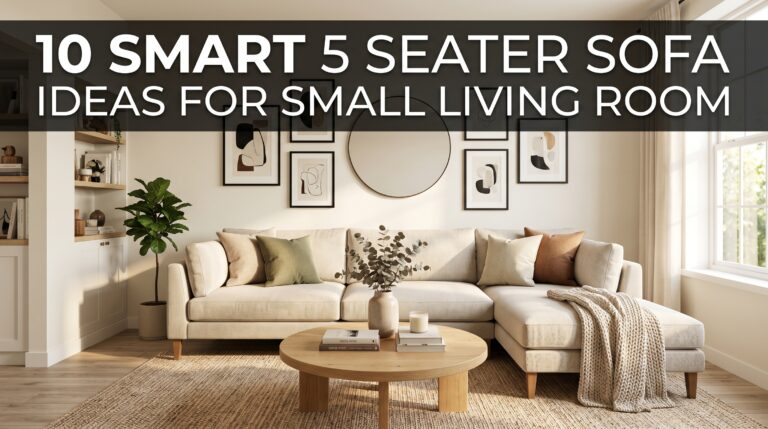
2. Go for an L-Shaped Layout
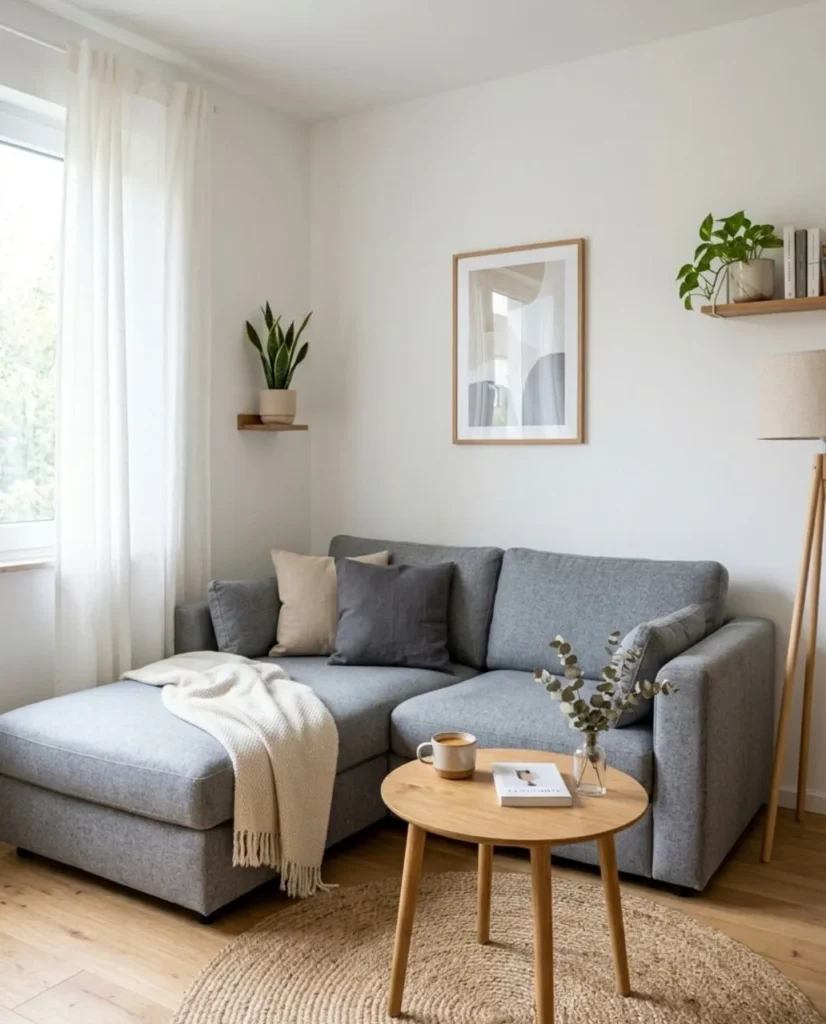
An L-shaped sofa or sectional is perfect for small living rooms.
It uses the corner space smartly and gives you more seating without adding extra furniture.
Why this works
- Maximizes corner areas
- Adds more seating in less space
- Creates a cozy vibe
How to style / tips
- Place the longer side along the wall
- Keep the shorter side open
- Pair with a small coffee table
Let me ask you… isn’t it nice when everything fits perfectly?
3. Use a Compact Loveseat Instead
Big sofas can overwhelm a small room.
A loveseat keeps things light and simple while still giving you comfort.
Why this works
- Saves space instantly
- Makes the room feel less crowded
- Easier to move around
How to style / tips
- Add an accent chair for extra seating
- Use light-colored fabric
- Keep nearby decor minimal
Sometimes less really is more. Sounds good, right?
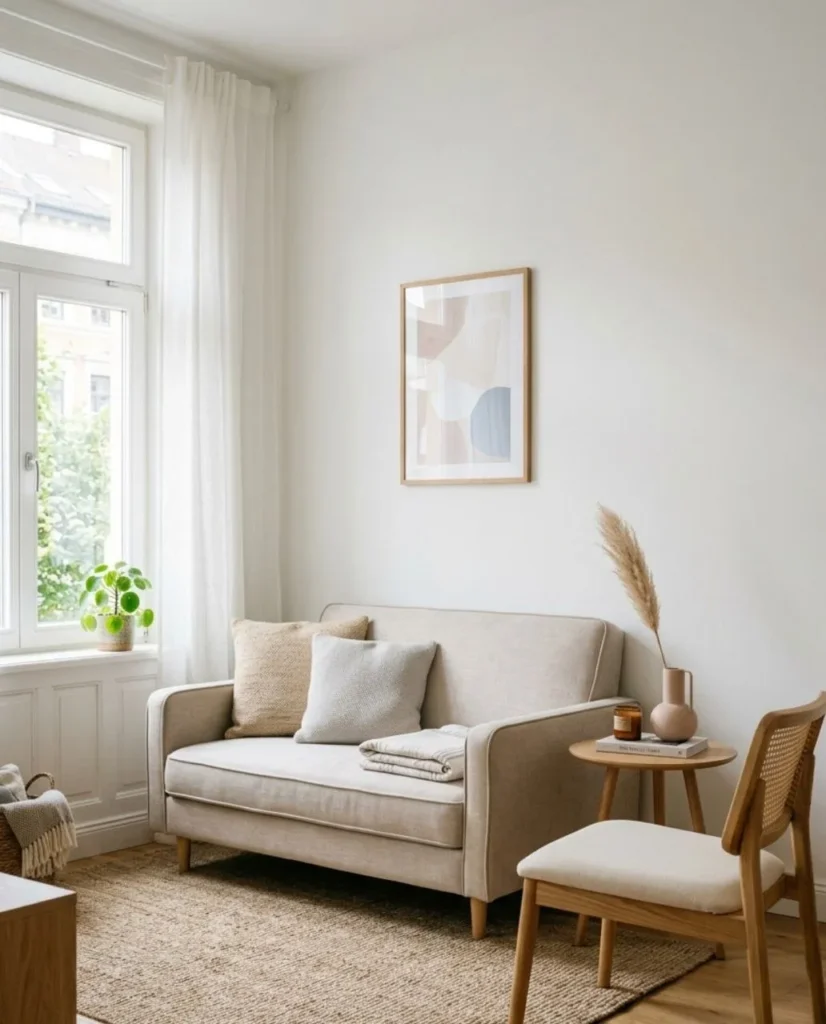
4. Place Sofa Facing the Window
If your room has a window, use it.
Positioning your sofa to face natural light makes the space feel brighter and bigger.
Why this works
- Enhances natural light
- Opens up the room visually
- Creates a relaxing vibe
How to style / tips
- Keep curtains light and airy
- Avoid blocking the window
- Add a small side table
Ever noticed how light changes everything?
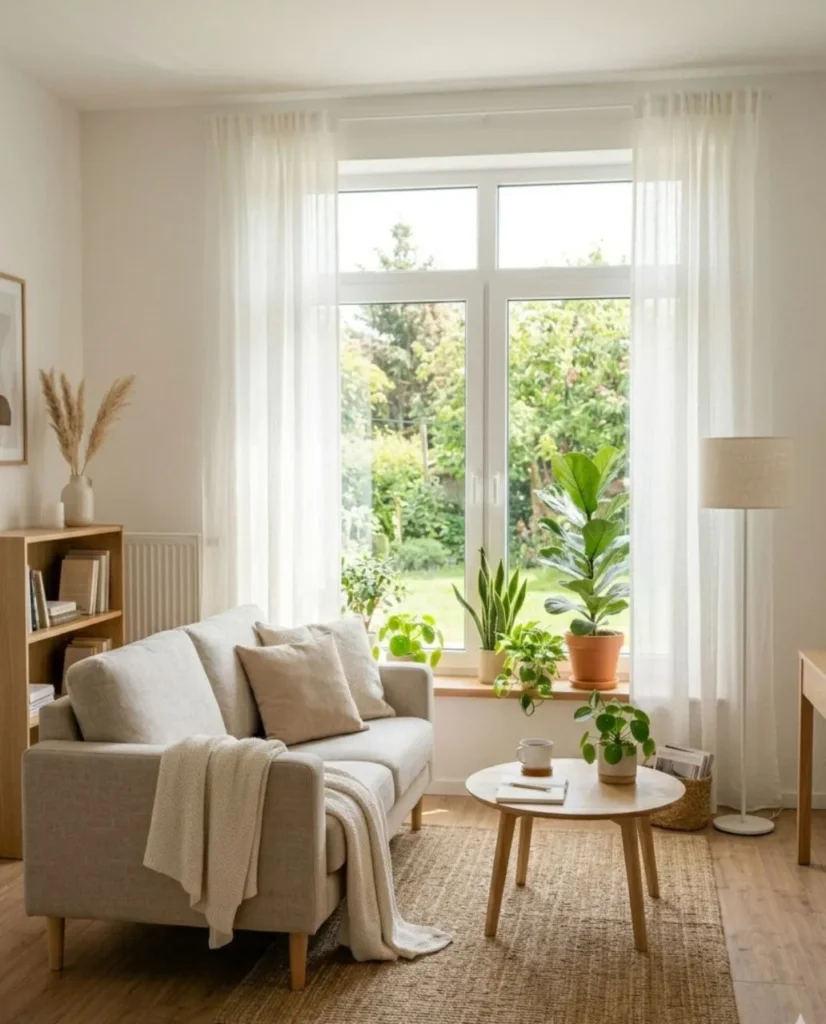
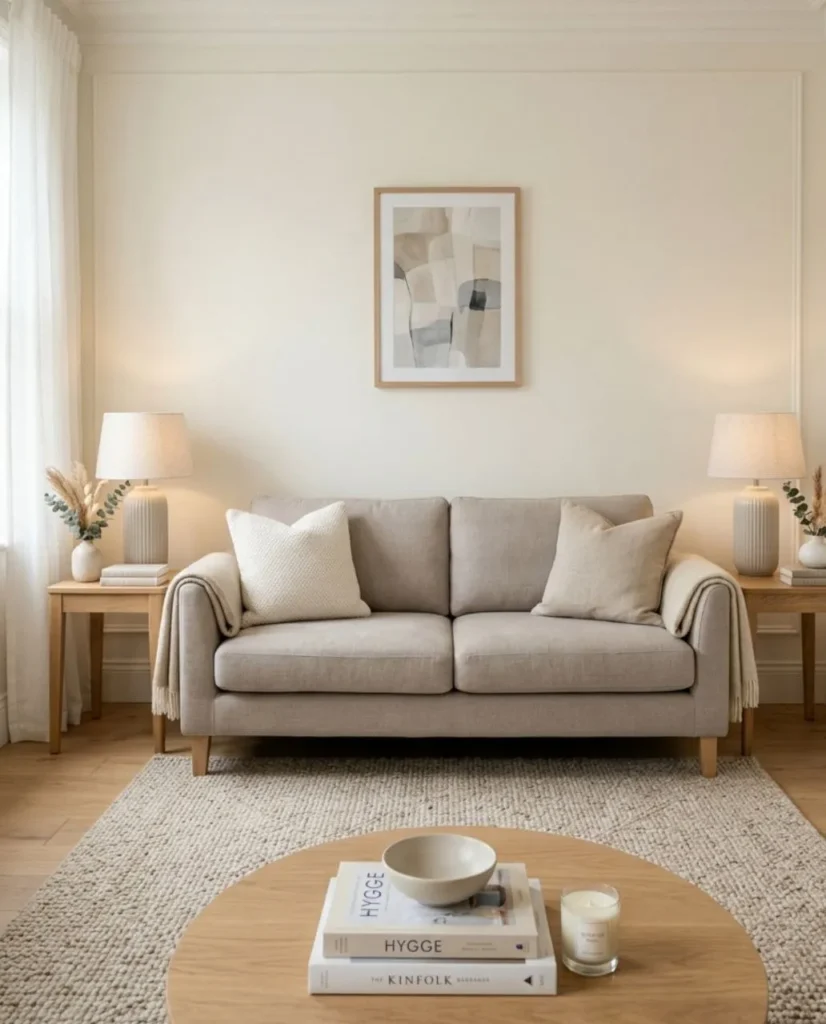
5. Try a Symmetrical Layout
Symmetry brings balance.
Place your sofa in the center and add matching elements on both sides for a clean, organized look.
Why this works
- Makes the room feel structured
- Visually calming
- Easy to style
How to style / tips
- Use matching lamps or tables
- Center the sofa with a rug
- Keep spacing equal
6. Use a Backless or Low-Back Sofa
Heavy, bulky sofas can make your room feel tight.
A low-back or backless sofa keeps sightlines open and makes the space feel larger.
Why this works
- Keeps the room visually open
- Makes ceilings feel higher
- Reduces visual clutter
How to style / tips
- Pair with light decor
- Avoid tall furniture nearby
- Use neutral tones
Let me ask you… doesn’t open space feel calmer?
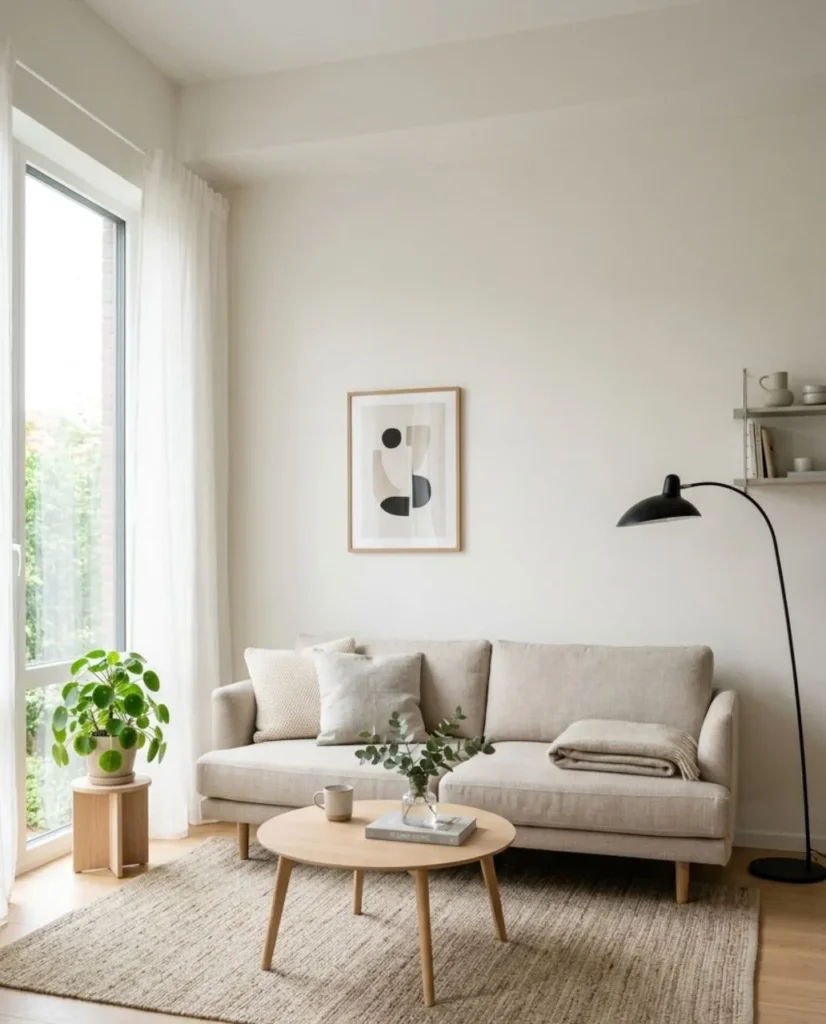
7. Angle the Sofa Slightly
Straight lines can sometimes feel rigid.
Angling your sofa a bit can create a more dynamic and spacious layout.
Why this works
- Breaks boxy layout feel
- Adds visual interest
- Improves movement flow
How to style / tips
- Keep the angle subtle
- Use a round coffee table
- Balance with soft shapes
It’s a small trick, but it changes everything.
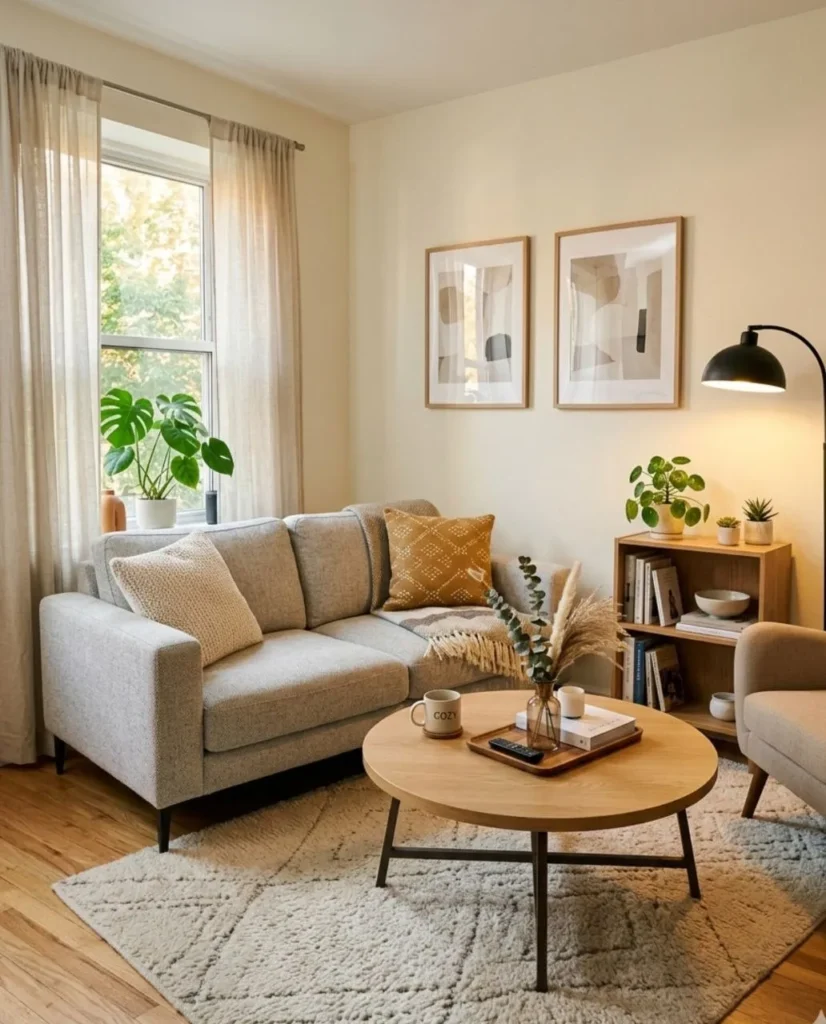
8. Use Multi-Functional Sofas
In a small living room, every piece should work harder.
Think sofa beds or storage sofas.
Why this works
- Saves space
- Adds functionality
- Reduces clutter
How to style / tips
- Choose sleek designs
- Avoid bulky frames
- Keep nearby space open
Why have one function when you can have two?
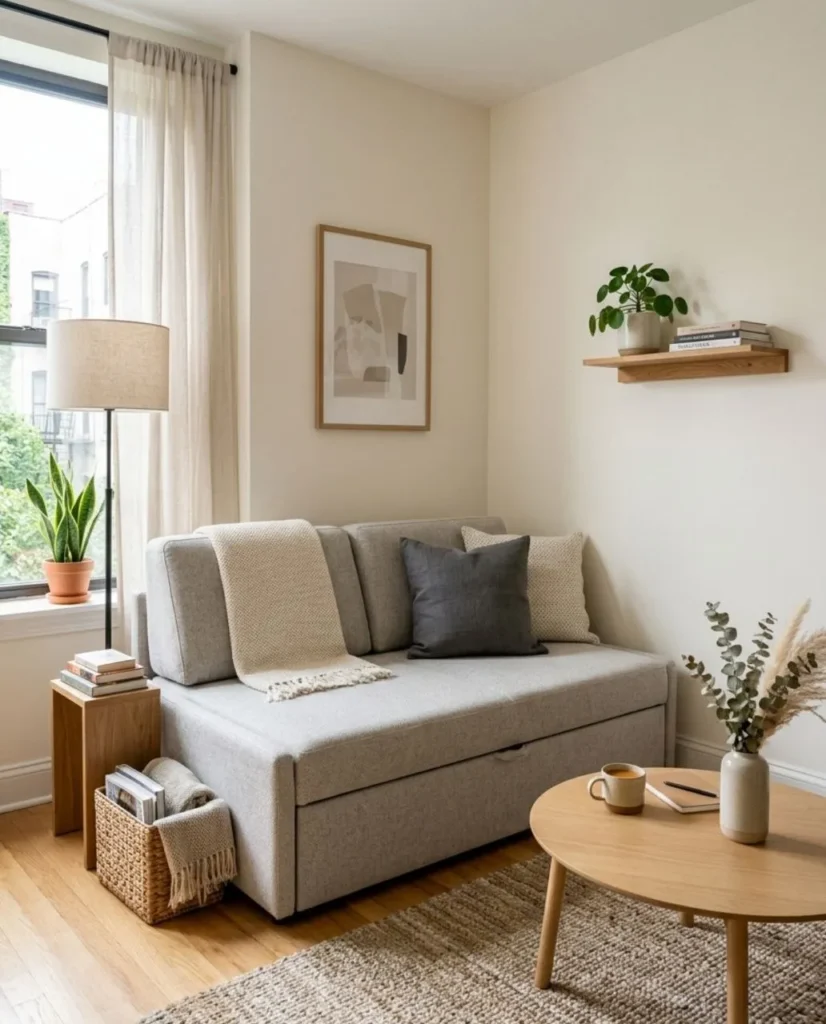
9. Create a Zoning Layout
Even small rooms can have zones.
Use your sofa to separate spaces, like living and dining.
Why this works
- Defines areas clearly
- Makes space feel organized
- Improves usability
How to style / tips
- Place sofa as a divider
- Use rugs to mark zones
- Keep pathways clear
Ever noticed how organized spaces feel bigger?
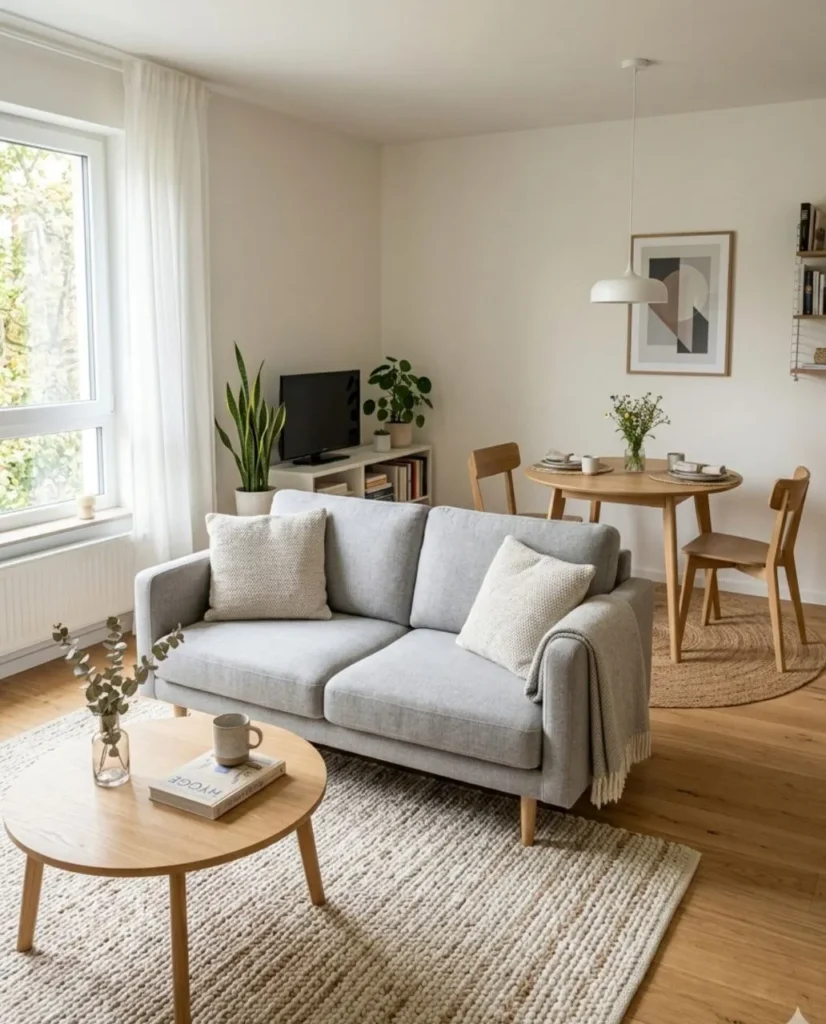
10. Keep It Minimal Around the Sofa
Sometimes the problem isn’t the sofa… it’s everything around it.
Too much furniture makes the room feel tight.
Why this works
- Reduces visual clutter
- Makes the sofa stand out
- Creates breathing room
How to style / tips
- Limit side tables
- Choose slim furniture
- Declutter regularly
Let me ask you… do you really need that extra table?
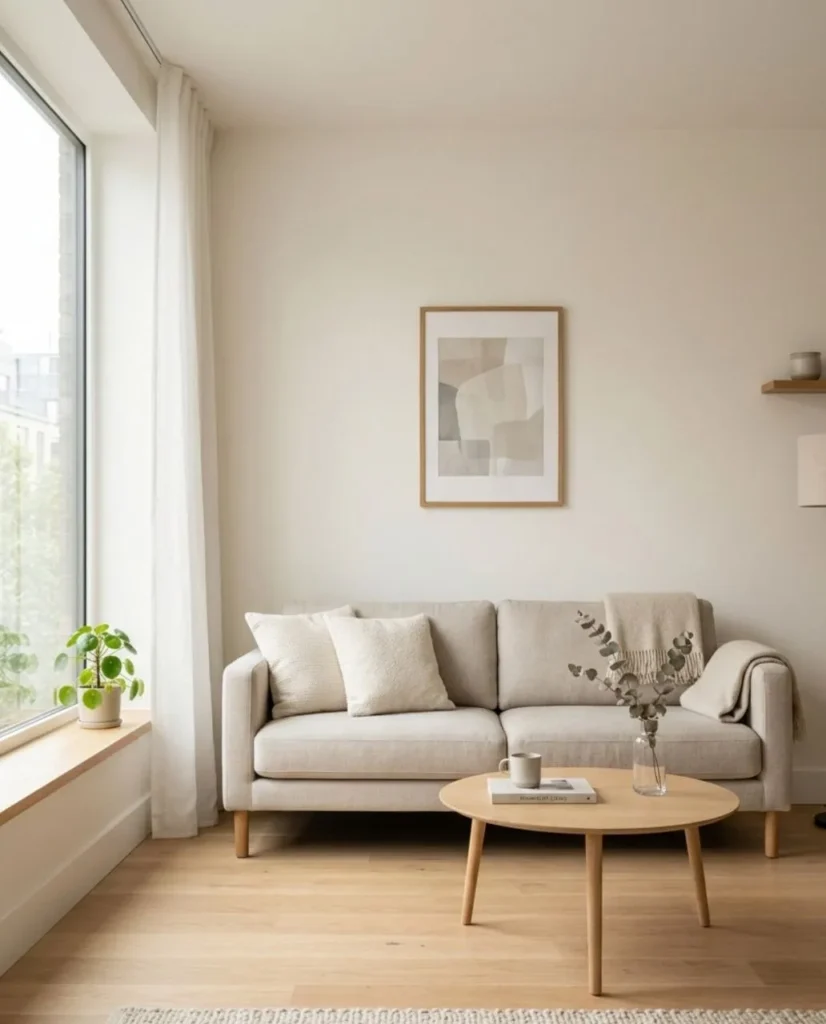
CONCLUSION
So here’s the truth. A small living room doesn’t have to feel small.
With the right small living room sofa layout, you can make your space feel bigger, cleaner, and more comfortable. It’s all about smart placement, not more furniture.
Try a few of these ideas. Move things around. Test what feels right.
At the end of the day, your space should work for you.
Now ask yourself… does your living room actually feel open and relaxing, or just full?